
Who we are
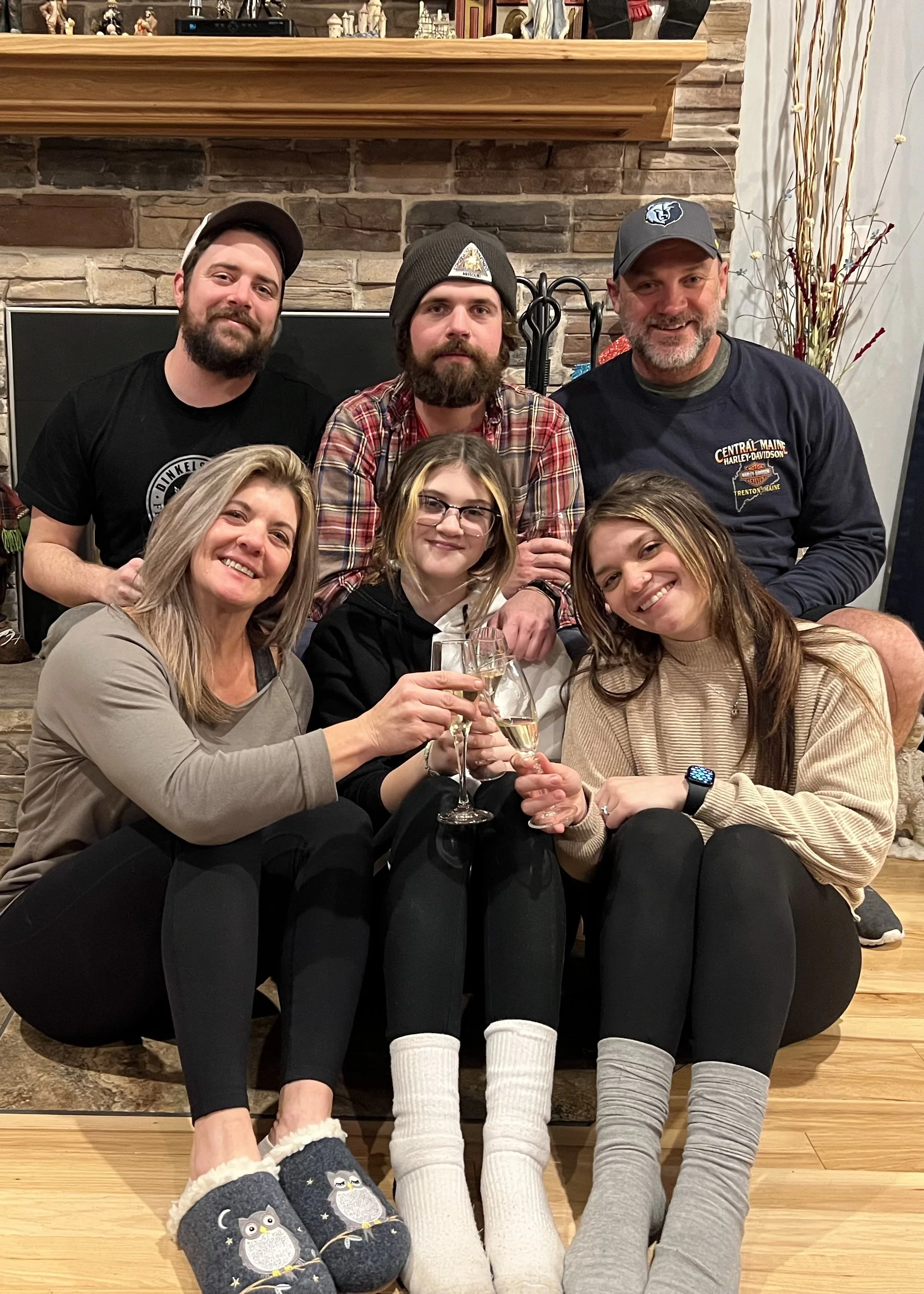
Kinsey Family Vineyards was developed with the community in mind. We are a close knit family business that is dedicated to the forward progression of agriculture and viticulture.
Our model is based around soil health, and its importance in the plant system. Rooted in the teachings of William A. Albrecht, we utilize soil data to help us craft the ideal nutrient program for our soil type and area.
Our aim is to also educate and inform others about the multitude of benefits that can come from thinking about the soil and how to effectively manage that side of your operation.
With so little assets to our growers and so much misinformation online, we have decided to try and take some of the headache off of our winemaking community and dive into growing and distribution of our own wine grapes. The past few years, we have seen grape plantings decline, as weather, economy, and other factors have led to growers ripping out more and more vines. We want to supply wineries and home winemakers with quality wine grapes, to help supplement those years where support may be needed. But more importantly, help those that want to do it. Our team specializes in viticulture and enology, and has a vast network of growers and consultants from around the world. If we don’t have the answers, we know someone who does.
Many growers are seeing the benefits of soil health and nutrition, but do not know where to start or have the time to really research or implement the necessary practices for optimum vine quality, which is also where we try to bridge that gap. We have a combined knowledge of over 50 years of field experience in viticulture, and are ready to help you maximize your vine health and quality through proper soil physics, chemistry, and biology.
From our family to yours,
Thank you for growing with us
Our Soils
HOMEPLACE — Chaffee, MO
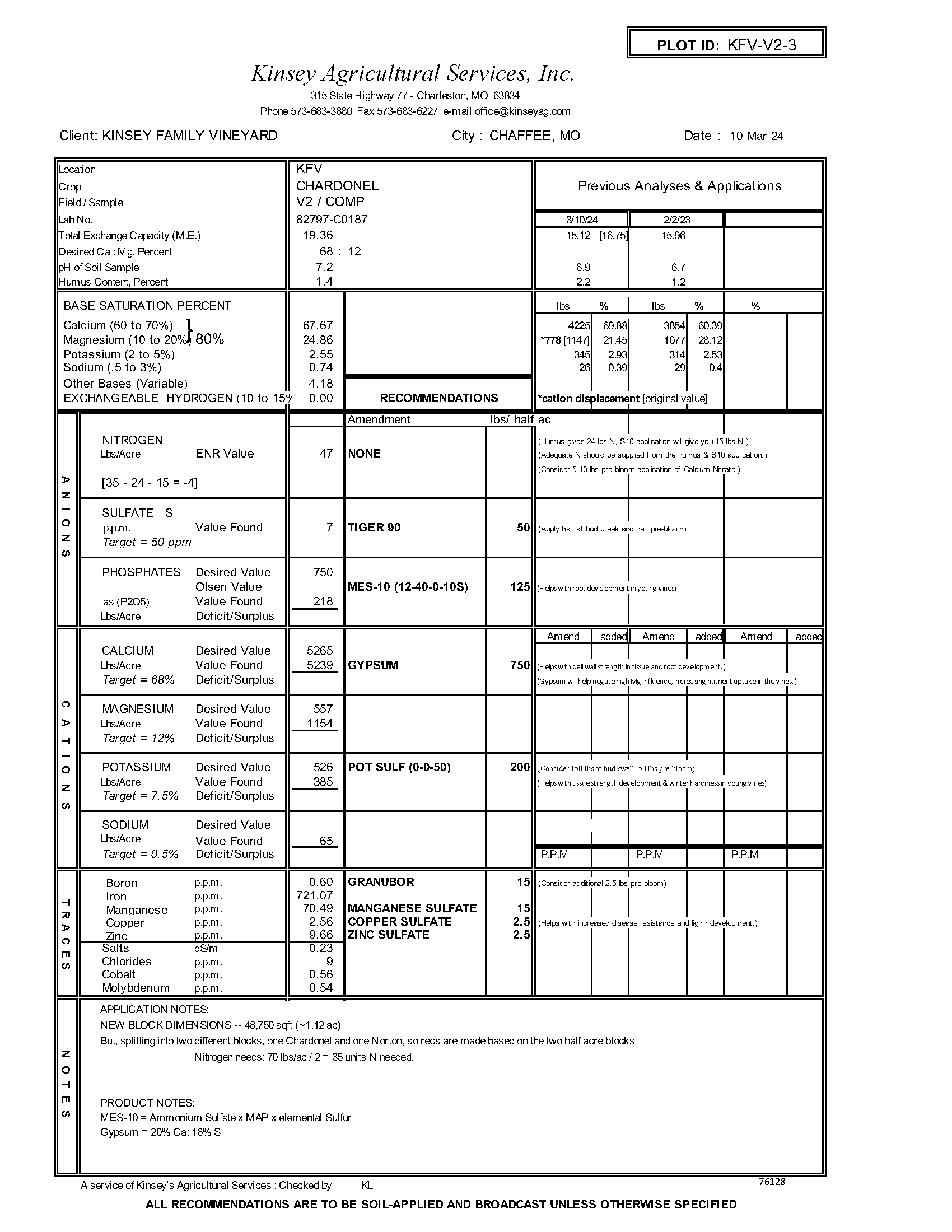
Nestled in the hills between New Hamburg and Chaffee, MO, the soils on our farm are classified as Memphis silt loam. These soils were formed in loess, which was windblown silt deposited after the last Ice Age, which is common along the Mississippi River Valley.
The topsoil is a well-structured silt loam, transitioning into a clay loam subsoil, which offers excellent drainage in the aerobic root zone while maintaining water-holding capacity below. This dual profile supports vine health by promoting root oxygenation while buffering against short-term dry periods.
To optimize performance in these conditions, we selected 101-14 Mgt rootstock—well-suited for heavier soils with higher moisture content, and with average annual rainfall around 50 inches in our region, this choice provides a strong foundation for vine establishment and productivity. In drier seasons, we mitigate 101-14’s lower drought tolerance by employing supplemental irrigation to support and maintain consistent vine performance. Even most of our hybrids are grafted for better control, vine balance, and quality.
Like much of Missouri, our native soils carry elevated magnesium levels and tend to be naturally deficient in phosphorus and potassium. However, we’ve seen definitive progress in correcting those imbalances over the years through careful soil management and targeted nutrition. Our vines are healthier, hardier, and producing quality fruit year after year as a result.
We’ve have vineyards on both conventional and organically managed spray programs, as well as a hybrid program, aiming to minimize synthetic inputs while preserving and promoting soil life. Soil health will always be a work in progress, but it is the foundation of everything we do — because happy vines grow better grapes, and better grapes make better wine.
And that just sounds better to us.
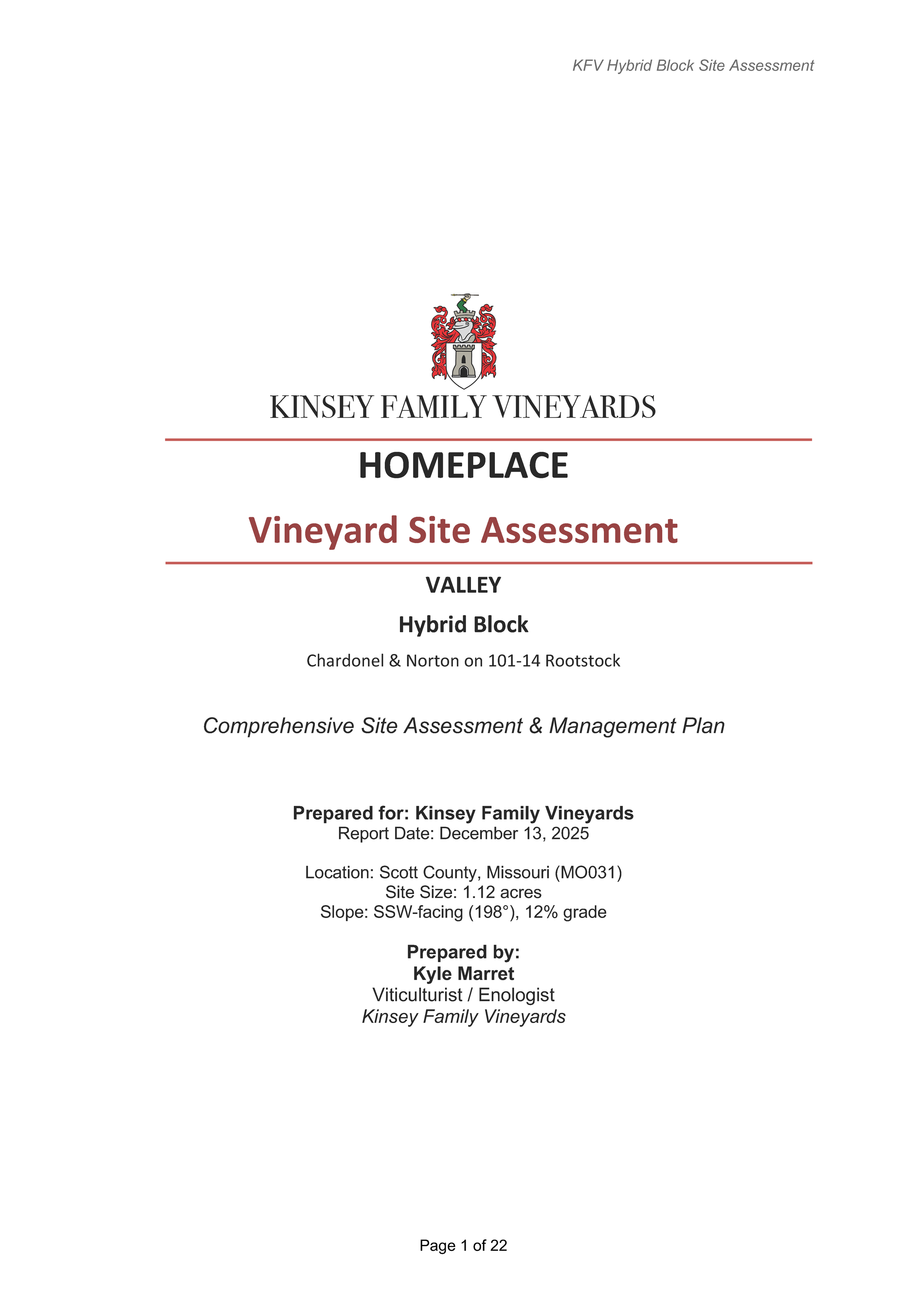
See our comprehensive assessment on HOMEPLACE
We dive deep into the research and data to understand what is happening beneath our feet and how the soil chemistry and physical structure will affect our vine physiology and its impact on grape and wine production.
Our Soils
Highland Dells Ranch — Jackson, MO
Highland Dells Ranch is our newest leased hillside site just north of Jackson, Missouri, with ~3 acres to be planted. This sample is an east–southeast facing block that will be planted to Cabernet Franc in Spring 2026.
Our newest addition comes from a collaboration between us and Highland Dells Ranch, a family-owned Highland cattle operation with a big interest in viticulture. It’s the kind of partnership we value: long-term land stewardship first, great farming as the standard.
The soils here are dominated by Menfro silt loam, formed in deep loess. These soils are typically well drained, deep, and naturally suited for hillside vineyards.
Preparation for the site will include ripping down to 24 inches, followed by strip-tilling the rows into a 6-inch mound for planting. This approach sets the vines up with an oxygen-rich root zone, encourages deep rooting, and helps us manage water movement and erosion on a slope, all while building a durable foundation for consistent Cabernet Franc.
For this site, we selected 101-14 Mgt rootstock for its lower-to-moderate vigor and excellent pH tolerance which is a strong fit for a block testing at pH 7.17, and an important tool for keeping Cabernet Franc balanced on deep, fertile silt loam. The tradeoff is that 101-14’s cold hardiness is rated as moderate (about -10°F), so we likely will pair it with intentional winter risk management (including practices like hilling up and multi-trunk training) because the site has recorded an absolute minimum of -5°F in 3 out of the last 5 years. We were strongly considering Riparia, but none was available and felt that 3309’s tendency to be vigorous coupled with heavy rainfall would lead to denser canopies and higher disease pressure.
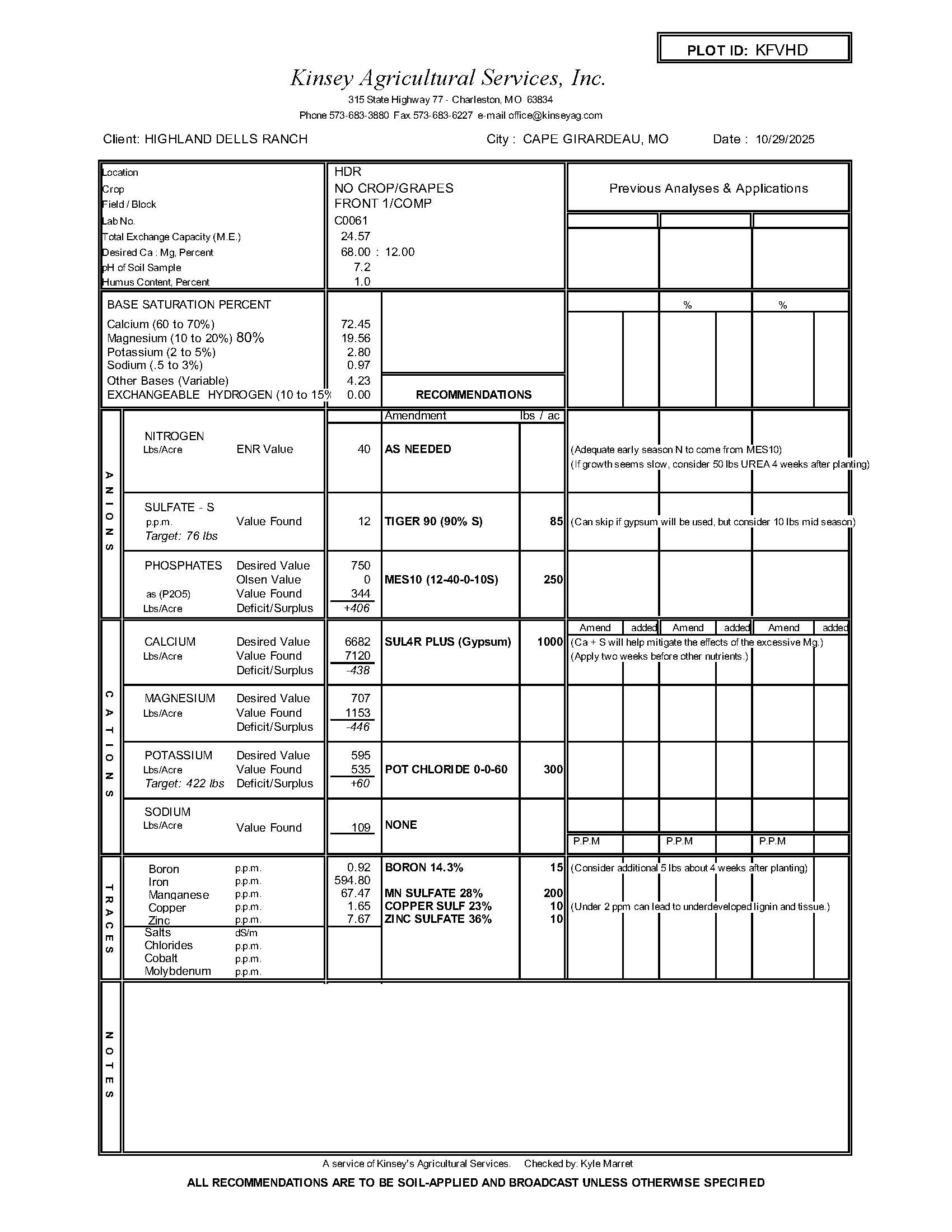
Chemically, the block is starting from a strong place. A CEC of 24.6 gives excellent buffering and nutrient-holding capacity, and the base saturation profile shows calcium around 72%—a solid foundation for soil structure and vine health. The one flag is magnesium around 20%, which is higher than we’d like and can lead to tighter soil behavior and nutrient antagonisms if it isn’t managed.
The good news is that this is exactly the kind of site that responds well when managed correctly. With targeted chemistry and thoughtful management, we’re confident Highland Dells Ranch will produce nothing but the highest quality Cabernet Franc fruit.
See our comprehensive assessment on HIGHLAND DELLS
We dive deep into the research and data to understand what is happening beneath our feet and how the soil chemistry and physical structure will affect our vine physiology and its impact on grape and wine production.
Meet the Team
-

Kyle Marret
LEAD VITICULTURIST / OWNER
-

Kane Marret
VINEYARD MANAGER / OPERATOR
-
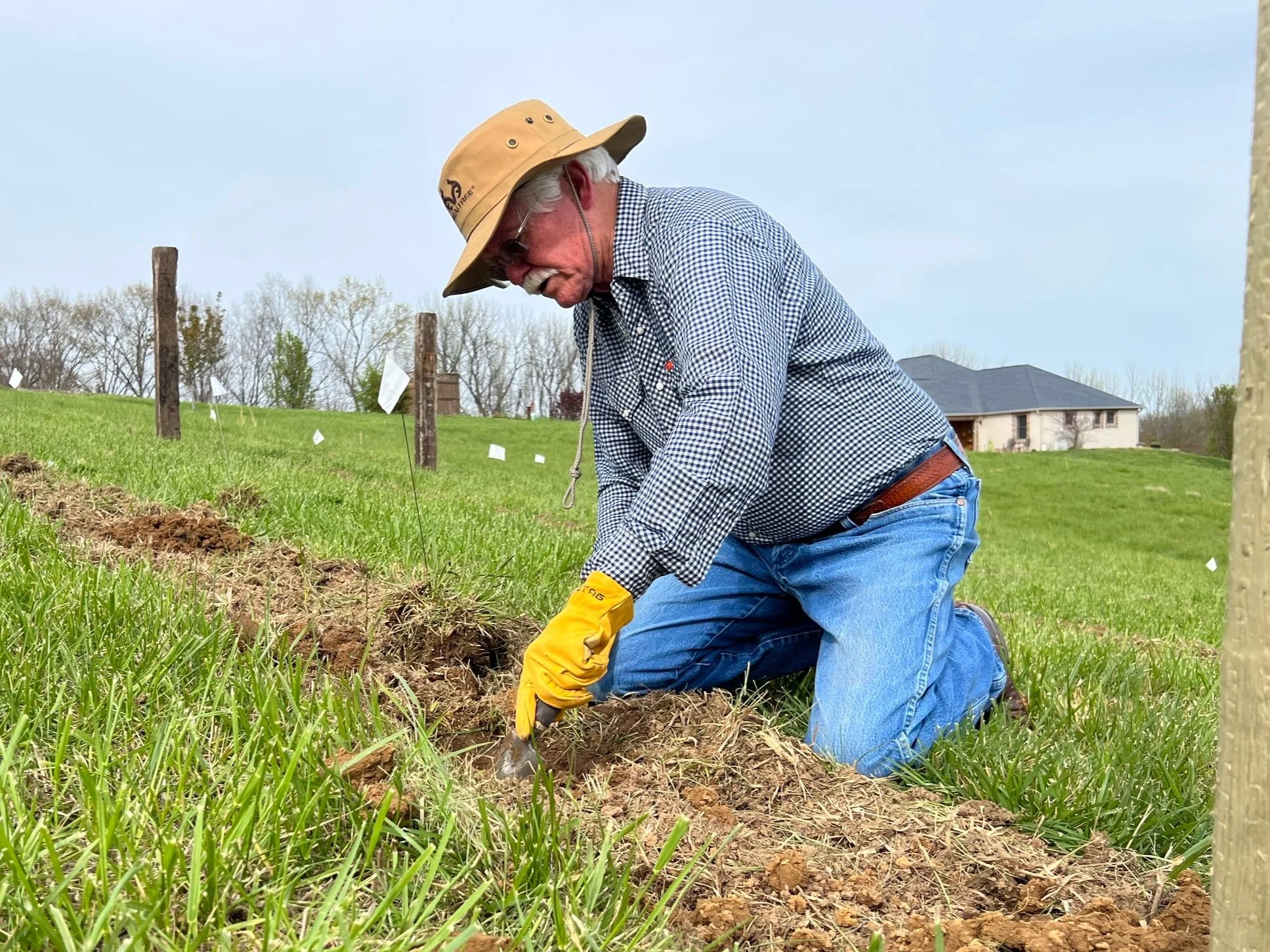
Neal Kinsey
PATRIARCH
-

Linda Kinsey
MATRIARCH
-
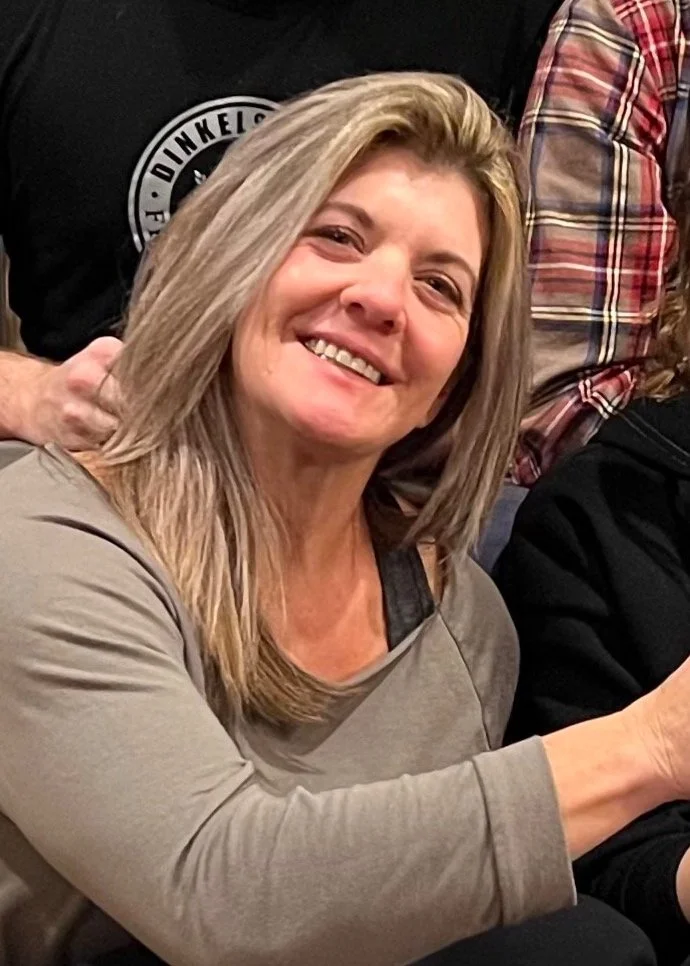
Joy Marret
SUPERVISOR / ACCOUNTING
-
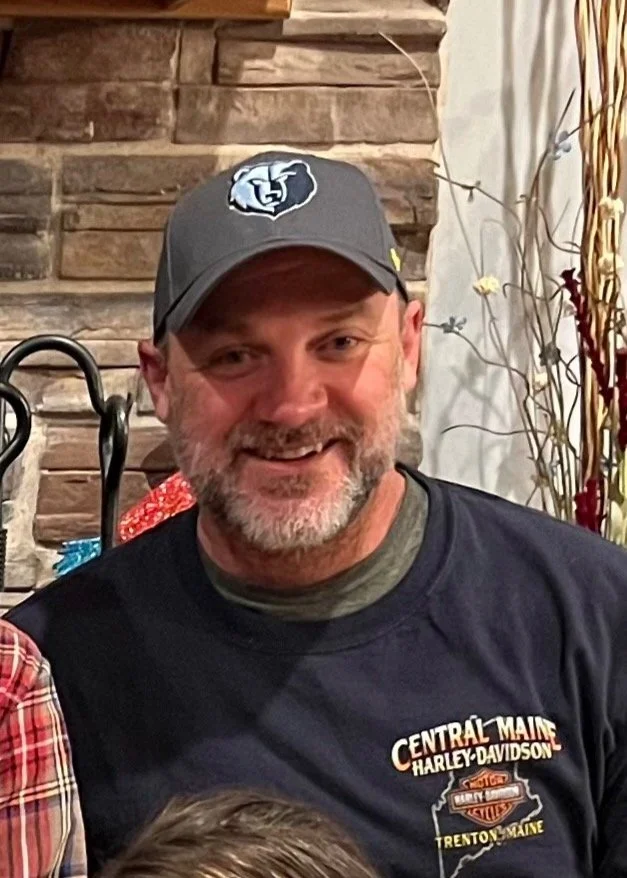
Josh Marret
INFRASTRUCTURE SPECIALIST / WINE HATER
-
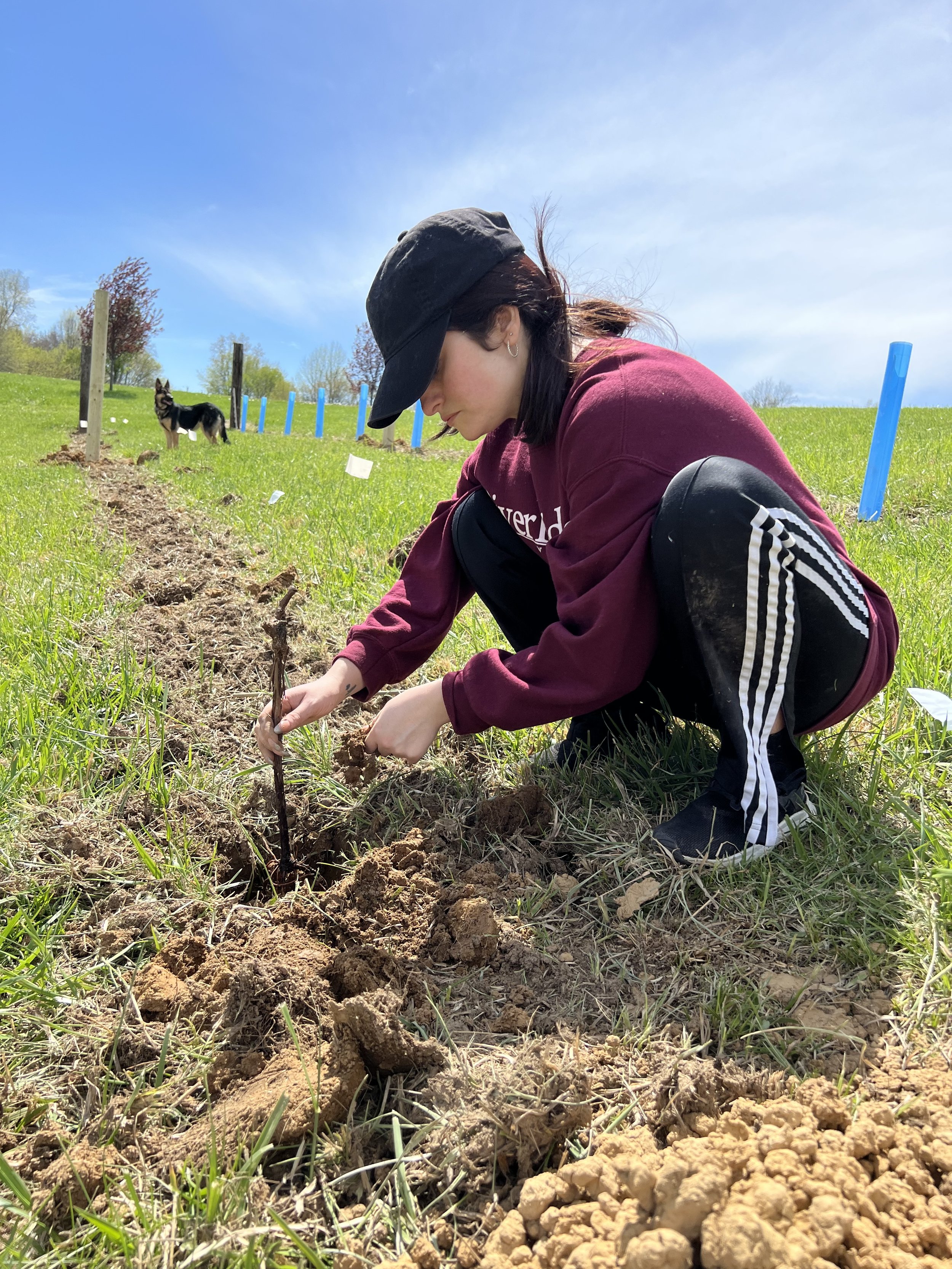
Andrea Fischer
FARM HAND
-

Edgar | Reignn
FARM HANDS
Contact us
Interested in working together? Fill out some info and we will be in touch shortly. We can’t wait to hear from you!